How To Grow Iceberg Lettuce (Tips From Seed To Harvest)
This post may contain affiliate links, my full disclosure can be read here. As an Amazon Associate I earn from qualifying purchases.
Learn how to grow iceberg lettuce and enjoy fresh, crunchy lettuce in your salads and sandwiches all summer.
When you think of lettuce, iceberg lettuce is probably what pops into your mind first.
Iceberg lettuce often gets looked down upon as being a tasteless variety commonly found in grocery stores. But this crisphead lettuce is now one of my favorite types of lettuce!
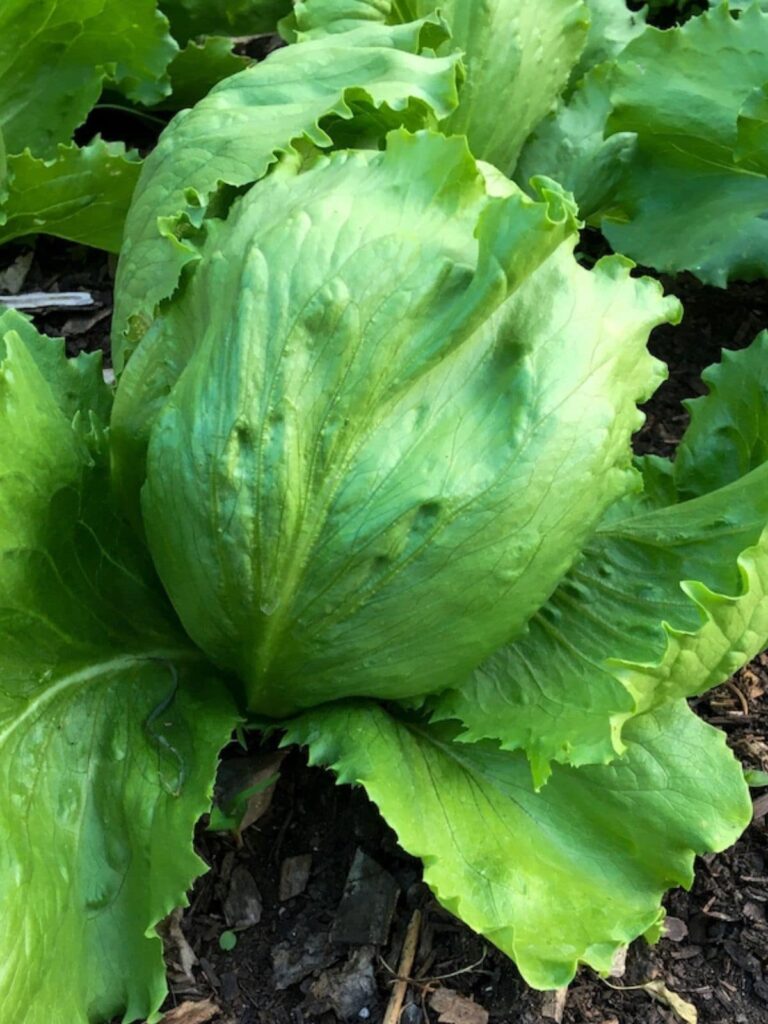
The change came when we started growing our own iceberg lettuce, it still had that crisp texture you would expect but the homegrown lettuce was so much sweeter and full of flavor.
Honestly, I enjoy it just as much as the loose-leaf lettuce and romaine types that we grow.
What Is Iceberg Lettuce?

Iceberg lettuce is a type of head lettuce that has been very popular for years. Growing up, it was pretty much the only type of lettuce we bought from the store. It was first developed in 1894 by the Burpee Seed Company.
Its name comes from the way it was transported. Heads of lettuce were packaged on crushed ice to help them stay cool, making the lettuce heads look like icebergs.
While many people dislike iceberg lettuce for its lack of flavor and common use compared to other types of lettuce.
It definitely has its place in your garden and table when you want a mild-flavored, crunchy lettuce that will let other flavors stand out.
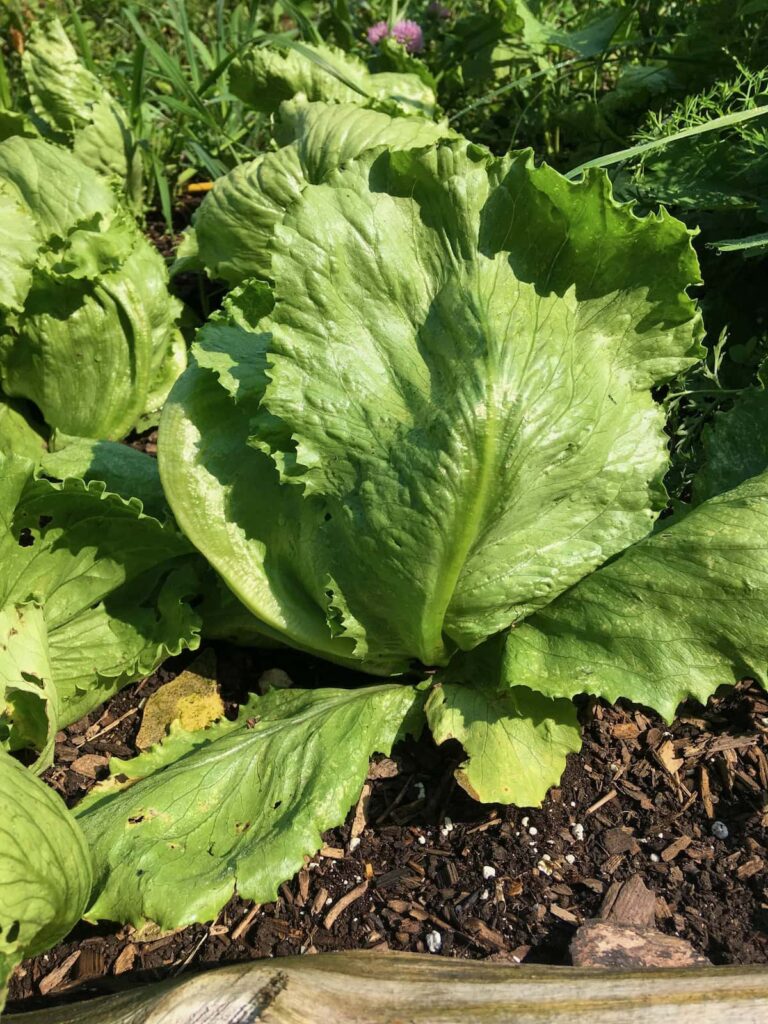
Being a head lettuce iceberg grows to form a ball shape head very different from how romaine lettuce forms a tall more open head.
It forms small, dense heads with bright green outer leaves. The inside leaves are light green to white in color.
It’s harvested by cutting the lettuce head from the plant instead of harvesting the outer leaves.
How To Plant Iceberg Lettuce Seeds
Lettuce is a vegetable that loves cool temperatures so start iceberg by seed indoors 4 to 6 weeks before you plant to transplant it into your garden. This will give you a head start on the growing season.
You can transplant lettuce seedlings into your garden 2 weeks before your last frost date. But you can plant even earlier if you can provide some frost protection.
A cold frame or row cover will help a lot to get the plants growing faster and give you an earlier harvest.
I’ve found that iceberg lettuce plants can take a light frost and thrive in cooler temperatures but if you are expecting a freeze it’s a good idea to provide protection.
We use wire hoops over the lettuce beds and cover them with a heavy-duty row cover. This helps us to plant a month ahead of our normal time in our growing zone and have lettuce as early as possible in the season.
Starting Indoors
Fill your cell packs with good quality seed starting mix. Make sure the soil is moist before you start planting.
Sow 2 seeds in each cell 1/4 inch deep and cover. Keep the seeds moist and they should germinate in 7 to 15 days depending on the temperature of the soil.
Once the seeds have sprouted thin the seedlings leaving 1 per cell. Keep the seedlings under your grow lights or in a bright window until the seedlings are about 3 inches tall.
Start hardening off your seedlings 7 days before you want to transplant them outside. This will help reduce the transplant shock after planting.
When your young lettuce plants are ready transplant them into your garden or planters spacing them 12 inches apart.
Direct Sowing
Lettuce can easily be direct seeded in your garden but this is best done in the early spring or fall. Lettuce doesn’t germinate well when the soil temperature is over 72F (22C) in the summer.
Sow your seeds in rows or patches every 2 to 3 weeks this will help you to have longer lettuce harvests.
Plant seeds 1/4 inch deep 12 inches apart or sow thicker and thin when the plants are about 3 inches tall.
This will help the lettuce plants to grow nice-sized heads, just remember not to waste the thinnings! They make great baby greens.
How To Grow Iceberg Lettuce
Sunlight
Lettuce grows well in full sun and partial shade. If you are planting lettuce in the spring or fall it’s best to plant in an area of your garden that gets full sun.
But if you are growing lettuce in the summer and you get high temperatures in your area then providing afternoon shade will help keep your lettuce plants from struggling in the warm weather.
Lettuce plants can quickly bolt when the hot weather arrives. This means that the plants form a flower stock and try to make seeds.
Unfortunately, when lettuce bolts it gets very bitter tasting. Giving it some shade in the summer and enough water can help keep it growing for a long time in the summer.
Watering

Lettuce has a shallow root system, so you need to take care to provide enough water. Having too little water can cause the plants stress and make them grow slower and taste bitter.
On the other hand, too much water can cause root rot and other mold problems.
Don’t worry though lettuce is very easy to take care of just make sure you don’t give it too much excess water.
The plants will need 1 inch of water per week in normal growing conditions. If you are in a drought or simply having extremely hot weather, increase the amount of water to 2 inches if your soil is dry.
Mulching
Mulching your garden is a massive help in reducing the amount that you need to water. It helps to stop moisture from being evaporated by wind and the baking sunlight of late summer.
Place 2 to 4 inches of mulch around your plants to help retain moisture and reduce weeds. Straw, shredded leaves, and wood chips all make great garden mulch.
Fertilizing
Like most leafy green vegetables iceberg lettuce will grow best in fertile soil rich in organic matter.
Using only organic fertilizer you can grow amazing lettuce plants. Adding 1 to 2 inches of good compost to your garden in the fall or spring before planting will help to build up your soil and feed the plants.
At planting time water the seedlings with liquid fish emulsion or seaweed fertilizer to help them get off to a great start.
Harvesting

Depending on the variety of iceberg lettuce that you are growing it will be ready to harvest in 55 to 90 days.
Head lettuce won’t hold for long once the head has formed. When the head has grown and feels firm, it’s time to harvest.
To harvest simply cut off the whole head at the base of the plant. Then place the lettuce into a container of cold water to chill.
This will help to cool down quickly and drive any bugs out of the lettuce. Rinse it off well and let it drip dry, then place the lettuce in a plastic bag and keep it in the refrigerator until you’re ready to use it.
After harvesting you can remove the remaining lettuce plant from your garden. Unlike leaf lettuce types iceberg doesn’t grow new leaves that you can harvest.
It’s better for a one-time harvest so if you want a continuous supply of fresh lettuce make sure to sow seeds every 2 to 3 weeks from spring to late summer.
Connect With Homestead Acres!
Be sure to follow me on social media, so you never miss a post!
Facebook | Twitter | Pinterest | Instagram
Visit my Amazon store to find all my favorite gardening, homesteading tools, and gadgets plus all of my printed garden books and journals!

Kim Mills is a homeschooling mom of 6 and lives on an urban homestead in Ontario, Canada. Blogging at Homestead Acres she enjoys sharing tips to help you save money, grow and preserve your own food.