
How To Kill Cucumber Beetles Organically
This post may contain affiliate links, my full disclosure can be read here. As an Amazon Associate I earn from qualifying purchases.
Are your cucumber plants starting to lose its leaves? It’s likely you are having a problem with cucumber beetles.

I gardened for years without seeing these little pests in my garden. Then we moved and ever since we’ve had striped cucumber beetles after our plants.
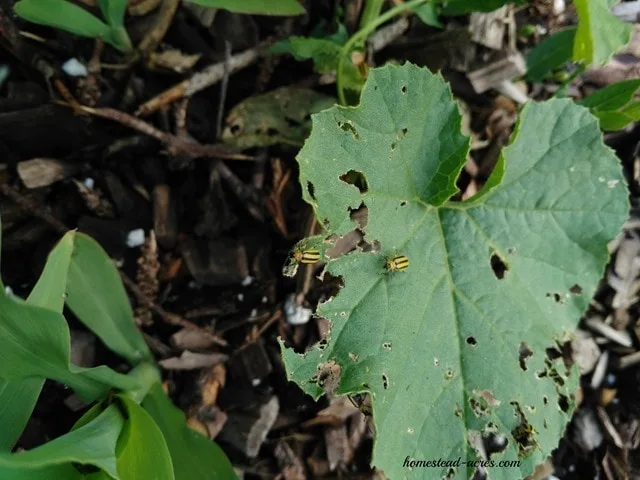
Striped cucumber beetles are a small beetle only 1/4 inch (6.35 mm) long. They are yellow with black stripes and easy to see in your garden.
At first, you might only notice one or two but left alone they will quickly multiply!
How To Get Rid Of Cucumber Beetles

Cucumber Beetle Life-Cycle
Adult striped cucumber beetles overwinter in protected areas close to houses, fences and in the woods.
In the spring when the weather starts to warm they begin to come out.
They will quickly find plants to eat and then lay their eggs around the base of the stem. The adult beetles eat the leaves, flowers, pollen and the larva eats the roots of cucumber plants.
The cucumber beetle larva emerges later in the summer as an adult beetle for the second round of their lifecycle.
Cucumber beetles are aptly named because cucumbers are their favorite food. However, I’ve also found them eating zucchini and other summer squash, melons, and pumpkins in my garden.
Early in the season before these plants have sprouted I’ve also found them eating my tomatillos, ground cherries, peppers, and tomatoes! See these are nasty little pests.
Cucumber beetles can quickly devour young plants but their damage goes beyond only eating your crops. They also carry bacterial wilt disease.
Bacterial Wilt
Cucumber beetles carry the bacteria that causes bacterial wilt in their guts. As these beetles feed on your cucumber plants they can spread it through their mouths and feces.
Once the bacteria has been introduced it spreads quickly and causes the leaves of your cucumbers to wilt.
At first, you will notice your cucumber leaves start to flop down a little.
Then other leaves around it will droop and then the stem. The bacteria spreads quickly and causes the entire plant to wilt and die.
There is little you can do to save an infected plant the best method is prevention.
Delayed Planting
You can try delaying your cucumber plantings by a few weeks. Some gardeners and market growers who have longer growing seasons have had luck by doing this.
When the cucumber beetles emerge in the spring if they don’t find food nearby they will fly to where they can find it.
So by delaying your plantings any cucumber beetles that have overwintered in your garden should leave before your plants are up.
They will still be affected by the second round of beetles but by then your plants are larger and more established.
We live in a short zone 5 growing season so we have 3 months of summer and really we can get frosts into early June. Delaying planting isn’t always a good option for us.
A few years ago we were having a really bad year for cucumber beetles but I found an organic solution!

Using Diatomaceous Earth To Get Rid Of Cucumber Beetles
Diatomaceous earth works so well to keep cucumber beetles out of our garden!
Diatomaceous earth is a non-toxic powder that makes an excellent pest control for your garden. Diatomaceous earth is a fine powder that is made from ground up fossils of diatoms a type of algae with a hard shell.
When it’s ground up it would look something like broken glass shards under a microscope. You wouldn’t want to crawl through that and neither do the bugs!
To kill and prevent cucumber beetles I sprinkle diatomaceous earth all over my young plants and the ground around them. Most of the beetles are gone that day and a few days later I don’t find any at all.
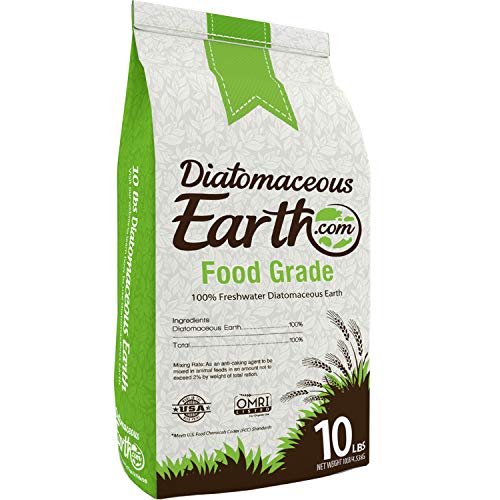

I find Amazon has the best price and a wide selection of diatomaceous earth.
Now there are a few things you need to know.
Diatomaceous earth can kill any bug that crawls through it and that includes bees. So I try to not use this on my plants when they are flowering.
Instead, I use it when my plants first come up and as needed until they are well established. Now if my plants were flowering and under a heavy attack from cucumber beetles, yes I would still use the diatomaceous earth.
I would try to apply it mostly to the ground around the plants, though. This way it would get the beetles without affecting the pollinating insects.
Tips for using Diatomaceous earth
- Apply diatomaceous earth sparingly and only use it on plants that are heavily affected by insects.
- Apply diatomaceous earth when the bees are less likely to be out. This is early in the morning or late in the evening.
- Apply diatomaceous earth on the soil around your plants where the pests are more likely to be and bees are not normally found.
- Use a mask when applying diatomaceous earth, especially when it’s windy. It’s a gritty powder and it’s not a good idea to be breathing that in.
More Organic Cucumber Beetle Control Tips
Obviously using diatomaceous earth is my favorite way to kill cucumber beetles but there are other natural methods you can use to protect your cucumber plants too.
A big part of this is by attracting beneficial insects to your garden.
Beneficial Insects
You may be surprised to find out but ladybugs and lacewings will eat cucumber beetle eggs! So make sure you plant lots of flowers around your garden that attract these helpful insects to your garden.
You can get ladybugs to add to your garden here for a great price!
Another helpful insect in the garden is the spined soldier bug. It doesn’t look very friendly and is often mistaken for a squash bug, but this helpful insect is a real predator in your garden.
Spined soldier bugs have a very sharp proboscis that they use to literally suck the juices out of other insects. They are very helpful for getting rid of cucumber beetles but they also eat many other pests like cabbage worms and flea beetles.
Sticky Traps
Another method that works for killing striped cucumber beetles is to place yellow sticky traps near your cucumber plants.
These sticky bug traps are the same color as the cucumber flowers and the adult beetles will be attracted to them.
Make sure to place the sticky traps out into your garden before the cucumbers start to flower for them to be the most effective.
Use Trap Crops
You can also plant trap crops out into your garden before your cucumber plants go in.
Blue hubbard squash is a great trap crop for cucumber beetles because it produces a high amount of cucurbitacin starting when the plants are only 2 weeks old.
Plant these host plants on the edges of your garden and watch them closely for signs of cucumber beetles.
Place yellow sticky traps around the plants to help catch the adult cucumber beetles when they first start showing up in your garden. Then dust the plants well with diatomaceous earth to kill the remainder.
Prevent Cucumber Beetles
Start taking measures early in the garden season to prevent damage from cucumber beetles. This starts by deciding what varieties of cucumbers you want to grow.
While there are none that are actually resistant to cucumber beetles planting cucumbers that are resistant to bacterial wilt will help a lot because the plants won’t be susceptible to the diseases the cucumber bugs carry.
Another way to deter these garden pests is to keep spraying a thin coating of kaolin clay over the leaves through the growing season.
It creates a surface that insects really don’t like. I like this brand that comes in bulk for gardens and orchards.
One of the easiest ways to control cucumber beetles on your plants is to keep them covered with floating row covers.
You’ll want to use a lightweight one that is made for insect protection and not frost protection during the main growing season.
This cover will keep the adult beetles from landing on your plants.
The only downside to this is that you would either have to pollinate the cucumber flowers by hand or remove the cover once the cucumbers start to flower so bees can pollinate the flowers.
I’ve tried many organic sprays over the years for different bugs in our garden. So far diatomaceous earth is the only natural method I’ve found that successfully controls cucumber beetles.
Now that you’ve learned how to get rid of cucumber beetles organically I hope you’ll have a much more relaxing growing season!
Do you need an easy way to keep track of your garden? Click here to get your free printable garden journal.


Kim Mills is a homeschooling mom of 6 and lives on an urban homestead in Ontario, Canada. Blogging at Homestead Acres she enjoys sharing tips to help you save money, grow and preserve your own food.


Thank you for the article on cucmber beetles. Infested with them last summer for the first time but still got a fair number of cukes later in the season. Definately try all your suggestions this year. I was wondering if you have any suggestions on the Mexican bean beetle. We have always growen Blue Lake pole beans with great sucess not so last year, not one bean to be had. Any suggestions would be greatly appreciated.
Helen, gardener in Niagara Falls,Ont.
I’ve had problems with them before, too. Making sure the plants are getting enough water helps. I also sprinkle the leaves with diatomaceous earth, and it gets rid of the bean beetles pretty quickly for me.
WE USED diatameous powder on cucumber beetles…didn’t work.
This did not work on my cucumbers
Great information presented here. I’ve used traps but eventually give up every year limiting our cucumber yield. Neighbor sprays insecticides & has massive harvest but I can’t do that. This year I will try your DE, kaolin clay & traps, I have all 3. TY
Will DE work with spotted cucumber beetles too. I’ve seen both striped and spotted cucumber beetles in my garden. Thanks in advance.
I use dr. bronners soap and water and it kills them instantly. I’ll try the diatomaceous earth too!
i get cucumber beetles every year in my zucchini, cucumbers and green beans – after starting off great producing great fruit, they are dead by august
I just learned about DE and applied it heavily to the leaves and ground at the base. This morning I did not see any live CC beetles
How long should I leave it on? Can it harm the plants? I watered heavily the day before and got heavy rain the night before, so I am thinking I can go two days without watering
Joe
How do you get rid of slugs or snauils?
Other than applying DE to soil, should I dust the leaves as well? I have my tomatoes, chilies, and tomatillo in containers. So far I’ve seen these beetles on the tomatillo, which I’ve isolated. Thanks in advance for your help! I really appreciate the information.
Hi Kim
You might want to check your Amazon links,I dont think they are working
Hi Kim,
So happy to have found you and your site! I am a retired NJ woman with 6 4×8 raised garden beds to grow our vegetables. Last year was a nightmare with an infestation of cucumber beetles. Not wanting to use a pesticide I bought neem oil but found it challenging to spray each leaf top and bottom early or late enough so as to not hurt the bees. I was out there regularly trying to knock off the beetles into sudsy water, and used duct tape to pick up egg clusters. Very labor intensive and it was a losing battle. Dealing with post Covid health problems- low energy etc has been a factor.
I ordered lightweight row covers for our gardens this year. I’m wondering what else I need to buy. DE? yellow sticky traps? ladybugs? I would so like to have a successful gardening year. I just love gardening and getting fresh produce but it is so discouraging to have to battle bugs and disease secondary to my lack of knowledge/experience.
So looking forward to your help!
Debi
Thank you for your article! It has been an awful year for our garden, and then a couple weeks ago, I discovered these little pests eating everything on my mature zucchini and moving onwards to the rest of the garden! I will be trying your methods! Thank you so much!
Are there any BT controls for cucumber beetles?
No BT only works on caterpillars.
It seems to be a bad year for cucumber beetles. Off to get some diatomaceous earth, thanks for the tips.
This is great information and well written. I did see some cucumber beetles this year, not knowing what they were. Now I can be vigilant. Thanks Kim.
Thank you! This is exactly the information I was looking for. This is my first year gardening in Illinois and I have never dealt with cucumber beetles before. I used DE for many things in Texas and I love it as a alternative to chemicals – it even works on fire ants.
Hi Kim, I’m also a home schooling momma who loves canning, gardening & baking! I have used DE on my cucurbits but after 1 season I noticed a significant decrease in my worm population. Sure enough, worms die when they come in contact with DE 🙁 I am still trying to find a solution to the cucumber beetle problem here in NH. Have a great Spring!
Hi Karin, Yes DE could hurt worms but I think it would take a lot of it to lower a worm population that much. We use a lot of DE in our gardens and anywhere you dig we find handfuls of worms and other insects. We do use a deep mulch system of gardening and that might make the difference. We have 4-5 inches of compost over the solid and then about the same in wood chips. As they break down they create a huge amount of organic material for worms and other insects to live in.
Sprinkling a little DE ON your plants shouldn’t cause a lot of damage to other insects over the long term. We only need to use it for a week or two in the summer. After that, the cucumber beetles have left.
Another option to try is neem oil and yellow sticky traps. 🙂